
You find an apartment you like, submit your application, and wait for an answer. Then the landlord rejects your application or asks for a much larger security deposit than you expected.
Sometimes, the problem is not your current income or your ability to pay rent. It may be something in your tenant screening report.
This report can contain information about your rental history, credit, court records, and other parts of your background. If something is wrong, outdated, or belongs to another person, it could affect your chances of getting a home.
The good news is that you have rights under US federal law. You can request certain reports, check the information, and dispute errors.
Here is how to do it step by step.
What Is a Tenant Screening Report?
A tenant screening report is a background report that a landlord or property manager may use to decide whether to rent a property to you.
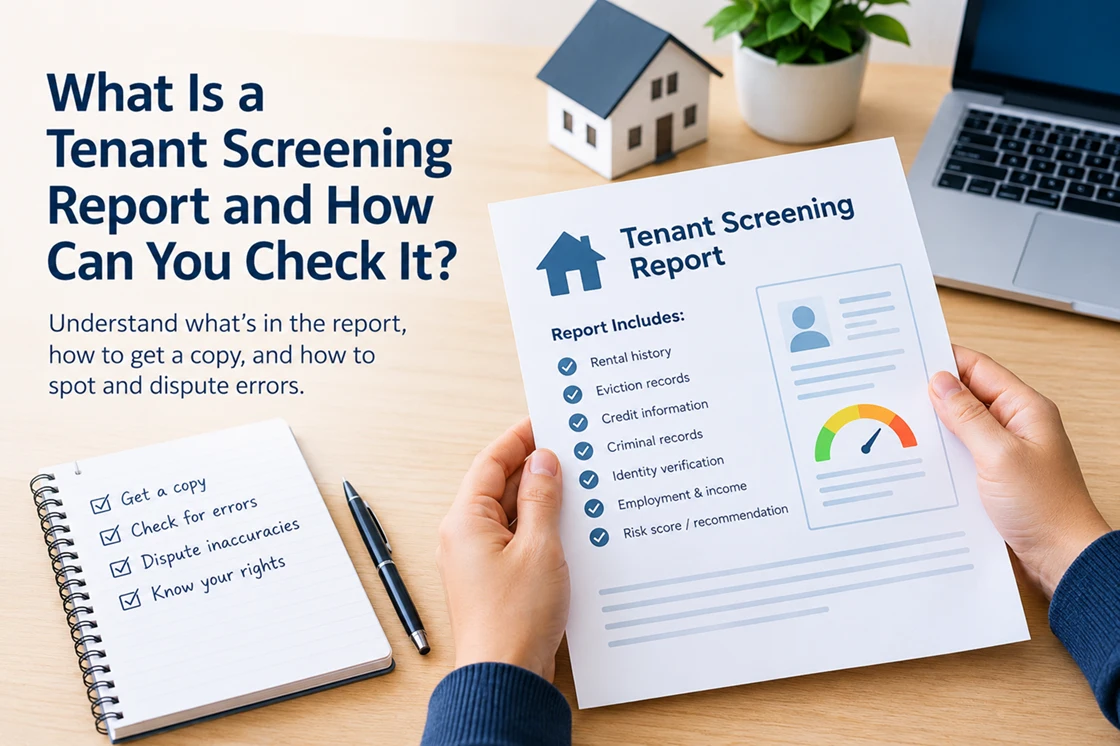
A company that prepares these reports gathers information from different sources and sends it to the landlord. The report may include:
- Rental history: Previous addresses, rental payments, and information about past rental problems.
- Eviction records: Court records about eviction cases or filings.
- Credit information: Debts, payment history, and other details from your credit report.
- Criminal records: Certain criminal history information, subject to applicable law.
- Identity and address information: Details used to check whether the report matches you.
- Employment or income verification: Information used to assess whether you can afford the rent.
- Risk scores or recommendations: A score or summary that helps the landlord evaluate an application. Not every report contains all these details. The information depends on the company, the screening package, the landlord's request, and applicable law.
A tenant screening report is also different from a regular credit report. Your credit report focuses on credit activity, while a tenant screening report may combine credit information with rental records, court information, and other background checks.
Why Does a Tenant Screening Report Matter?
Landlords may use these reports to assess rental applications. Information in a report can affect more than the final decision.
For example, a landlord might:
- Reject your rental application.
- Ask you to provide a co-signer.
- Require a larger security deposit.
- Offer a lease with less favorable terms. These decisions can make it harder or more expensive to find a home. That is why checking your information matters, especially if you plan to move soon or have been rejected unexpectedly.
How to Get a Copy of Your Tenant Screening Report
The most important step is finding out which company prepared the report. There is no single tenant screening report that includes everything every landlord might see.
Step 1: Ask the landlord which company they used
If your rental application was rejected, or you were asked to pay a higher deposit because of a background report, ask the landlord for the name and contact details of the screening company.
You can send a simple message:
Hello, I understand that information from a tenant screening or consumer report may have affected my rental application. Could you please provide the name and contact details of the company that prepared the report, along with any available information about the issue? Thank you. Under the federal Fair Credit Reporting Act (FCRA), a landlord who takes an adverse action based on a consumer report must provide a notice identifying the reporting company and explaining your relevant rights.
Step 2: Check whether you qualify for a free copy
If a landlord takes an adverse action against you based on a tenant screening report, you generally have the right to request a free copy of that report from the company that prepared it.
You must request it within 60 days of receiving the adverse action notice.
An adverse action can include a rental rejection, a requirement for a co-signer, or a higher deposit or rent based on the report.
Contact the screening company using the details in the notice. Follow its instructions for requesting your report. You may need to verify your identity before the company releases it.
Ask the landlord whether they are willing to share a copy as well. However, do not rely on the landlord to provide it when you can request it directly from the reporting company.
Step 3: Find other screening companies that may have information about you
If you have not received an adverse action notice, you can still investigate which companies might hold your information.
The Consumer Financial Protection Bureau (CFPB) maintains a list of consumer reporting companies (opens in a new tab). Look for the tenant screening section to find company names and their report-request procedures.
You may need to contact companies individually. One company's report will not necessarily match the report another company provides to a landlord.
Also, some tenant screening companies may not have a file on you at all.
Important: Do not assume every company must give you a free report on demand simply because you want to check your rental history. Your access rights and any fees depend on the applicable law and circumstances. If a landlord used a report against you, the 60-day free-copy right is especially important.
How to Check Your Tenant Screening Report for Errors
Once you receive the report, read every section carefully. Do not look only at the final score or recommendation.
Use this checklist.
1. Check your personal information
Make sure your name, date of birth, and other identifying details are correct.
A report may accidentally combine information from two people with similar names. If a record belongs to someone else, mark it clearly for dispute.
2. Check eviction records
Look at every eviction-related entry. Ask yourself:
- Is this case actually connected to me?
- Is the court information correct?
- Was the case dismissed or resolved?
- Does the report make one case look like several separate evictions?
- Is the record sealed or expunged under applicable law?
- Is the information too old to report under the relevant rules? An eviction filing is not always the same as an eviction judgment. If a case was dismissed but the report leaves out that result, the record may give a misleading picture.
Federal reporting limits and state protections can differ by record type. Do not assume that every criminal or court record must disappear after seven years.
3. Check rental debts and payment history
If the report says you owe a previous landlord money, compare it with your own records.
Look for:
- Rent payments that were made but still appear unpaid.
- Incorrect amounts.
- Fees that were removed or adjusted but still appear outstanding.
- Debts belonging to another person.
- Rental debt that was paid but has not been updated. Keep bank statements, payment confirmations, receipts, and written messages that support your position.
4. Check credit information
If the report includes credit data, check whether the accounts and balances belong to you.
Look for unfamiliar accounts, incorrect overdue amounts, and debts that have already been paid.
If the problem also appears on your regular credit report, you may need to dispute it with the relevant credit reporting company as well.
5. Check criminal and background information
Confirm that records belong to you and are described correctly. Look for duplicate entries, incorrect case outcomes, and records that should not appear under applicable law.
If a record is wrong, gather supporting documents before submitting your dispute.
How to Dispute an Incorrect Tenant Screening Report
If you find an error, do not simply explain it to the landlord and hope they fix it. Contact the company that prepared the report and, where appropriate, the source that supplied the incorrect information.
Step 1: Gather evidence
Collect documents that show what is wrong. Depending on the issue, these might include:
- Court records showing a case was dismissed.
- Receipts or bank statements showing rent was paid.
- A letter from a previous landlord.
- Documents showing that a debt was settled.
- Identification that helps distinguish you from someone with a similar name. Send copies rather than original documents unless the company specifically requires otherwise.
Step 2: Submit a written dispute
Explain the exact error, where it appears, and what needs to be corrected. Include the report or reference number if available.
You can use this template:
Subject: Dispute of Incorrect Information in Tenant Screening Report
Hello,
I am writing to dispute information in my tenant screening report.
Information in question: [Describe the incorrect entry]
Why it is incorrect: [Explain what is wrong]
Requested correction: [State what should be corrected or removed]
I have attached copies of documents supporting my dispute. Please investigate the information, correct any inaccuracies, and provide me with the results of your investigation.
Please let me know if you need any additional information.
Thank you, [Your full name]
Keep a copy of your dispute, attachments, and any confirmation you receive.
Step 3: Contact the source of the error
If a court record is wrong, contact the relevant court to find out how to correct or update it. If a former landlord reported an incorrect balance, contact that landlord as well.
Correcting information at its source can help prevent the same error from appearing in future reports.
Step 4: Track the response
Under the FCRA, a reporting company generally has 30 days to investigate a dispute. Some cases can take up to 45 days, and state law may set different or shorter deadlines.
Read the company's response carefully. If it says the information was verified but you have evidence showing otherwise, send a follow-up dispute with the additional documents.
The FTC's guide to disputing tenant background check errors (opens in a new tab) explains the process and the information you should review.
What If Your Rental Application Was Denied?
If you believe a tenant screening report caused your application to be rejected, take these steps:
- Ask which report was used. Request the screening company's name and contact details.
- Request your free copy promptly. Do not miss the 60-day period after the adverse action notice.
- Find the exact problem. Review the report rather than guessing why the landlord rejected you.
- Dispute errors in writing. Include documents that support your claim.
- Ask the landlord to reconsider. Once an error has been corrected, you can share the updated result and ask whether the decision can be reviewed. Reconsideration is not guaranteed.
- Seek help if necessary. If you believe your rights were violated, consider contacting a local legal aid organization, a consumer protection office, or a qualified attorney. The reporting company supplies information, but the landlord makes the rental decision. Correcting an error does not guarantee approval, but it can help prevent inaccurate information from affecting future applications.
Do Tenant Screening Laws Differ by State?
Yes. The FCRA provides federal protections across the United States, but state and local laws may provide additional rights or restrictions.
Depending on where you live, local rules may affect the use of eviction records, criminal history, screening fees, record-sealing protections, or the time allowed for a dispute.
For example, a record that can legally appear in one state may be subject to additional restrictions in another. The rules can also depend on the type of record and how it is used.
If your report contains a disputed court record, check the law in the state where the record arose and the state where you are applying for housing. Local legal aid may help you understand which rules apply.
Frequently Asked Questions
Can I check my tenant screening report before applying for a rental?
You can contact tenant screening companies to ask whether they have a report on file and how to request it. You can also review your regular credit reports. However, not every screening company will have information about you, and the reports may differ.
Is a tenant screening report the same as a credit report?
No. A credit report focuses on credit information. A tenant screening report may include credit data along with rental history, eviction records, criminal history, identity checks, and other information.
How long does an eviction stay on a tenant screening report?
There is no single answer for every case. Federal reporting limits generally restrict eviction-related court information, but state laws may provide additional protections. The type of record, case outcome, and applicable law all matter.
Can I get my report for free after being rejected?
Generally, yes. If a landlord takes an adverse action based on a consumer report, you can request a free copy from the company that prepared it within 60 days of receiving the notice.
What if the screening company does not fix the error?
Send a follow-up dispute with clear supporting evidence. You may also contact the company that supplied the information, seek help from legal aid, or submit a complaint to the appropriate consumer protection agency.
Final Thoughts
A tenant screening report can affect your ability to rent a home, but you do not have to accept incorrect information without question.
Find out which company prepared the report, request a copy when you qualify, and check every entry rather than relying only on the final result. If something is wrong, dispute it in writing and keep your evidence.
Most importantly, act quickly after a rental rejection or other adverse decision. The 60-day period for requesting a free copy can pass faster than you expect, and correcting a problem early may help with your next rental application.