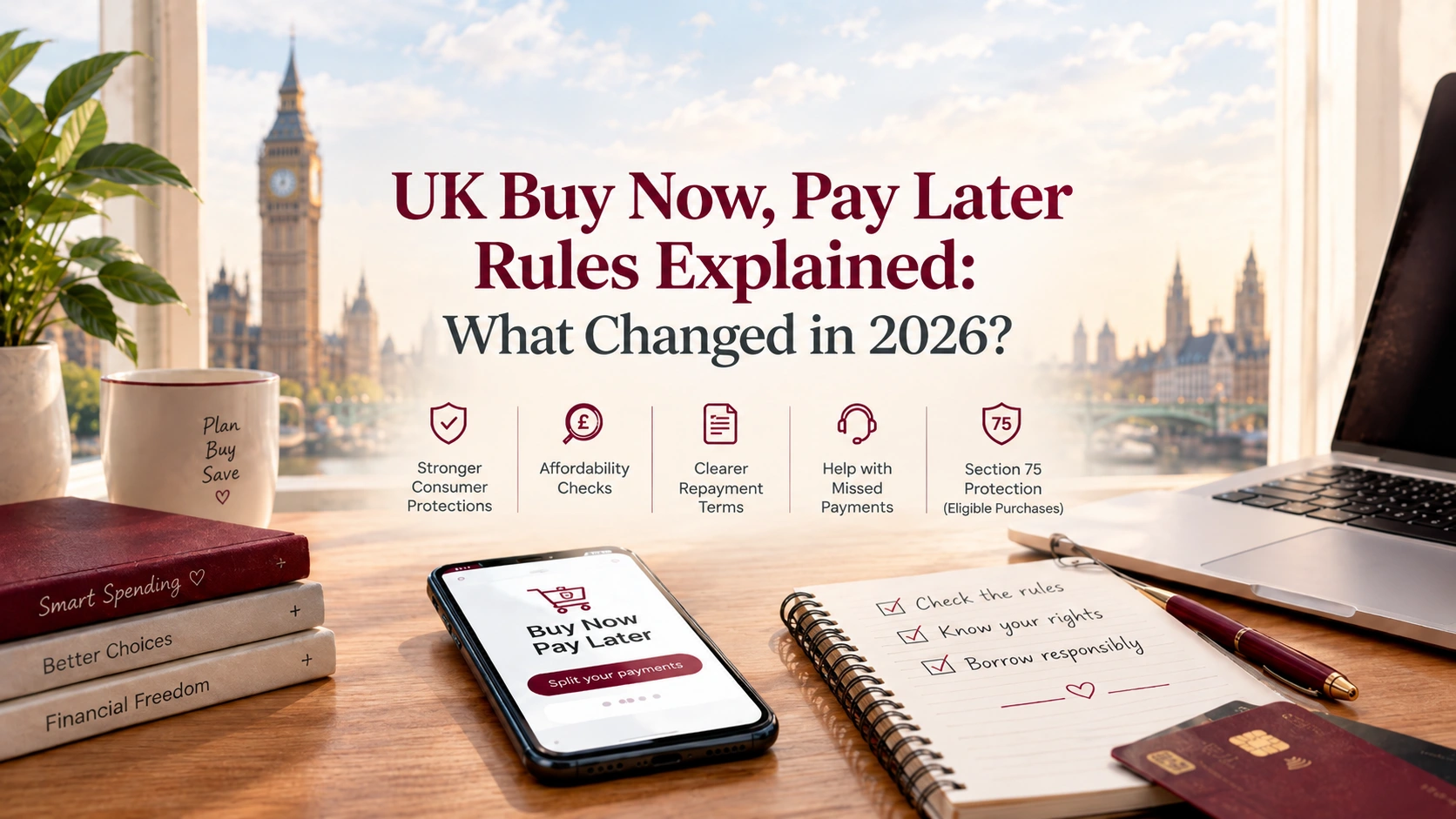
The UK Buy Now, Pay Later rules changed on 15 July 2026, bringing many short-term, interest-free payment agreements under the regulation of the Financial Conduct Authority (FCA). The changes mean covered providers must check whether customers can afford to borrow, explain repayment terms clearly, and offer support when someone struggles to pay.
The rules also give eligible shoppers stronger routes to complain and seek refunds when a purchase goes wrong.
However, the new protections do not apply to every product described as Buy Now, Pay Later (BNPL). The type of provider, the agreement and the date you took it out all matter.
Here is what the 2026 changes mean for shoppers in the UK.
What changed under the UK Buy Now, Pay Later rules in 2026?
Before 15 July 2026, many short-term, interest-free BNPL agreements provided by third-party lenders were outside the FCA's main consumer-credit rules. This left customers with fewer formal protections than they would normally receive with regulated credit.
From 15 July 2026, eligible BNPL agreements became subject to FCA regulation.
The main changes include:
| What changed | What it means for shoppers |
|---|---|
| Affordability checks | Providers must assess whether you can reasonably afford the repayments before lending. |
| Clearer information | You must receive important details about the amount borrowed, payment dates, instalments, fees and your rights. |
| Support with repayments | Providers must offer appropriate support if you experience financial difficulty. |
| Complaint rights | Eligible customers can escalate unresolved complaints to the Financial Ombudsman Service. |
| Stronger purchase protection | Eligible purchases may benefit from additional legal protections, including Section 75 rights where the relevant conditions are met. |
| FCA oversight | Covered providers must be authorised or have the relevant temporary permission to offer these agreements. |
These changes are intended to help people make informed borrowing decisions and reduce the risk of taking on repayments they cannot afford.
Which Buy Now, Pay Later services are covered?
The new rules mainly cover a type of credit called Deferred Payment Credit (DPC). It is generally an interest-free agreement that allows a customer to pay for goods or services in 12 or fewer instalments over 12 months or less.
The rules cover qualifying agreements where the lender and the retailer or service provider are separate businesses and the arrangement meets the legal definition of regulated DPC.
For example, you might buy a jacket from an online clothing shop and choose a separate BNPL company at checkout. If that agreement meets the requirements, it may be covered by the new rules.
Services associated with providers such as Klarna, Clearpay and PayPal can fall within the new regime, depending on the specific product and agreement.
Do not assume every payment plan from a familiar brand is covered. Providers may offer different products, and the legal treatment can differ between them.
What is not covered?
Some important exceptions apply:
- BNPL provided directly by the retailer: Where the retailer selling the goods also provides the credit, the agreement may fall outside this particular regulatory regime.
- Agreements taken out before 15 July 2026: These generally remain outside the new DPC rules, even if repayments continue after that date.
- Other types of credit: Interest-bearing credit and other payment products may fall under different rules rather than this specific BNPL framework.
If you already have a BNPL balance from an older agreement, do not assume that the new rules automatically give that agreement every new protection.
Check the terms of your agreement and contact the provider if you are unsure which rules apply.
1. BNPL providers must check affordability
One of the most important changes is the requirement for covered lenders to assess whether a customer can afford the borrowing.
Previously, some BNPL services allowed customers to make repeated purchases with relatively limited checks. This could make it easy to build up several repayment commitments without considering the combined cost.
Under the new rules, lenders must carry out proportionate affordability assessments before offering covered credit.
Depending on the provider and circumstances, the assessment may involve checking information about your finances, existing commitments or credit history.
Does this mean everyone will pass the checks?
No. A provider may decide not to approve a purchase if its assessment suggests the repayments would be unaffordable.
You may also find that the amount you can borrow differs between providers or changes as your circumstances change.
These checks can help reduce the risk of unaffordable lending, but they are not a guarantee that every approved agreement is suitable for you. A lender cannot necessarily know every upcoming expense or change in your personal circumstances.
What you can do: Before choosing BNPL, calculate how much you already owe and whether the new instalments will fit alongside rent or mortgage payments, household bills, food, travel and other essential expenses.
2. Providers must explain the repayment terms clearly
Another change concerns the information customers receive before entering an agreement.
For covered BNPL products, providers must give customers important details to help them understand the commitment they are making.
This includes information such as:
- The amount being borrowed.
- The dates repayments are due.
- The amount of each repayment.
- Any applicable late-payment fees.
- The consequences of missing a payment.
- The rights and protections available under the agreement.
This information matters because the advertised instalment can make a purchase appear more affordable than it really is.
For example, imagine you buy a £240 item and agree to pay it in four instalments of £60. That may seem manageable on its own.
But if you have three other BNPL agreements with repayments due during the same month, your total commitment could be much higher than you expected.
Before confirming a purchase, look at the full repayment schedule, not just the first instalment.
3. What happens if you miss a BNPL payment?
The 2026 rules strengthen the protections available to customers who struggle to keep up with repayments.
Covered providers must contact customers when they miss a repayment and explain what the missed payment means. They must also provide appropriate support to customers experiencing financial difficulty.
Depending on your circumstances and the provider's assessment, support may involve discussing an alternative repayment arrangement or directing you towards free debt advice.
However, the rules do not mean missed payments are consequence-free.
Depending on the agreement, missing a payment may lead to late fees, collection activity or information being shared with credit reference agencies. The effect on your credit file can depend on the provider, the product and the circumstances.
What should you do if you cannot afford an instalment?
Take these steps as soon as possible:
- Contact the provider early. Explain that you are struggling and ask what support is available.
- Check your agreement. Review any fees, payment dates and the consequences of missing a payment.
- Avoid taking out another BNPL agreement to cover the first one. This can increase the total amount you owe and make your finances harder to manage.
- Ask about repayment options. Discuss what you can realistically afford rather than agreeing to a plan you may not be able to maintain.
- Seek free debt guidance if needed. MoneyHelper can help you understand where to find appropriate support.
Do not ignore messages from your provider. Contacting it early gives you a better opportunity to understand your options.
4. Can you get a refund if something goes wrong?
The new regime strengthens certain consumer protections when a purchase financed through eligible BNPL goes wrong.
For qualifying agreements, customers may benefit from protections under Section 75 of the Consumer Credit Act. This can provide a route to claim against a lender in certain circumstances where a retailer breaches its contract or misrepresents goods or services.
Section 75 has specific legal requirements. It is not a universal refund guarantee for every BNPL purchase.
For example, if you order a qualifying item and the retailer fails to deliver it, you may have grounds to seek a remedy. Whether Section 75 applies depends on the agreement, the transaction and the relevant legal conditions.
The rules also do not mean that every dispute will automatically result in a refund. You may need to explain the problem, provide evidence and follow the appropriate complaint process.
What if an item arrives damaged or is not as described?
Start by contacting the retailer and explaining the problem. Keep your order confirmation, receipts, photographs and any messages relating to the purchase.
If the retailer does not resolve the issue, contact the BNPL provider and ask what protections apply to your agreement.
For eligible agreements, the lender may have legal responsibilities in addition to any remedies offered by the retailer. Check the provider's complaint procedure and do not assume that stopping your instalments without contacting it will resolve the dispute.
5. Can you complain about a BNPL provider?
Yes. If your agreement is covered by the new rules, you have stronger formal routes for challenging how the provider has treated you.
Start by making a complaint directly to the BNPL provider. Explain what happened, why you believe it was handled incorrectly and what outcome you are seeking.
Keep a copy of your complaint and any response.
If the provider does not resolve the matter to your satisfaction, you may be able to take your complaint to the Financial Ombudsman Service.
The Ombudsman independently considers eligible complaints about financial businesses and can determine whether a complaint should be upheld.
Eligibility and time limits depend on the circumstances, so check the relevant guidance before escalating your case.
The new framework gives customers a more formal way to challenge problems with covered agreements. It does not mean every complaint will be upheld.
6. Do the new rules apply to existing BNPL debt?
This is an important distinction.
The new DPC rules generally apply to qualifying agreements entered into on or after 15 July 2026. Agreements made before that date remain outside this new regime, even if the customer is still making repayments.
Consider two examples:
Example A: An older agreement
You bought a phone using a qualifying BNPL agreement in June 2026. Your instalments continue into November.
The fact that you are still paying in November does not, by itself, bring that earlier agreement under the new rules.
Example B: A new agreement
You make a qualifying purchase using BNPL in September 2026.
If the agreement meets the relevant conditions, the new rules should apply.
These examples illustrate the general timing rule. If you are dealing with a real dispute, check the date and terms of your agreement and confirm whether the specific product is covered.
7. Will BNPL affect your credit score?
It can, but the effect depends on the provider, the agreement and your payment behaviour.
Providers may use credit checks when assessing applications. Depending on the type of check, it may or may not be visible to other lenders reviewing your credit file.
Payment information may also be reported to credit reference agencies. Missed payments or other adverse information can affect how future lenders assess your applications.
There is no single credit-score outcome that applies to every BNPL purchase.
If you are planning to apply for a mortgage, credit card, personal loan or another form of borrowing, it is sensible to review your overall credit commitments and payment history.
Do not assume that a small BNPL instalment is irrelevant simply because it is interest-free.
8. Is Buy Now, Pay Later still a good idea in 2026?
BNPL can help spread the cost of a purchase when the repayments fit comfortably within your budget. The new rules provide stronger protections for many eligible agreements, but they do not remove the financial risks of borrowing.
Before using it, ask yourself:
- Would I buy this item if I had to pay the full price today?
- Can I afford every instalment without using money needed for essentials?
- Have I checked the dates of my other BNPL payments?
- Do I understand the consequences of missing a payment?
- Is the agreement covered by the new rules?
- Would waiting and saving for the purchase be a better option?
If you are using BNPL for groceries, bills or other regular essentials because your income is not covering your living costs, take that as a reason to review your budget. Repeatedly postponing payments can make a shortfall harder to manage.
The best payment method is one that lets you meet your obligations without creating financial pressure later.
Frequently asked questions
When did the new UK BNPL rules start?
The new rules for qualifying Deferred Payment Credit agreements came into force on 15 July 2026.
Are all Buy Now, Pay Later providers regulated by the FCA?
No. The rules cover qualifying products and agreements, not every payment option described as BNPL. The provider, retailer arrangement and type of credit all matter.
Do the new rules apply to BNPL purchases made before July 2026?
Generally, no. Qualifying agreements entered into before 15 July 2026 remain outside the new DPC rules, even if repayments continue afterwards.
Will BNPL providers check affordability?
For covered agreements, providers must carry out proportionate affordability checks before lending. Approval is not guaranteed, and checks do not guarantee that borrowing will be suitable for every customer.
Can a BNPL company charge late fees?
Late fees may apply where the agreement allows them. Check the terms before borrowing and understand what happens if you miss a payment.
Can I take a BNPL complaint to the Financial Ombudsman Service?
You may be able to if your complaint concerns an eligible regulated agreement and you have followed the required complaint process. Check the Ombudsman's current eligibility requirements and time limits.
Does Section 75 protect every BNPL purchase?
No. Section 75 has specific legal conditions, and its application depends on the agreement and transaction. Do not assume every BNPL purchase qualifies.
The bottom line
The UK Buy Now, Pay Later rules introduced on 15 July 2026 give shoppers stronger protections for many qualifying agreements. Covered providers must assess affordability, explain repayment terms, support customers in financial difficulty and provide access to formal complaint routes.
But the changes have limits. Some retailer-provided payment plans fall outside this particular regime, and agreements taken out before the start date generally do not receive the new protections.
Before using BNPL, check which rules apply, read the repayment terms and make sure the instalments fit your budget. Extra consumer protection is valuable, but it cannot make an unaffordable purchase affordable.