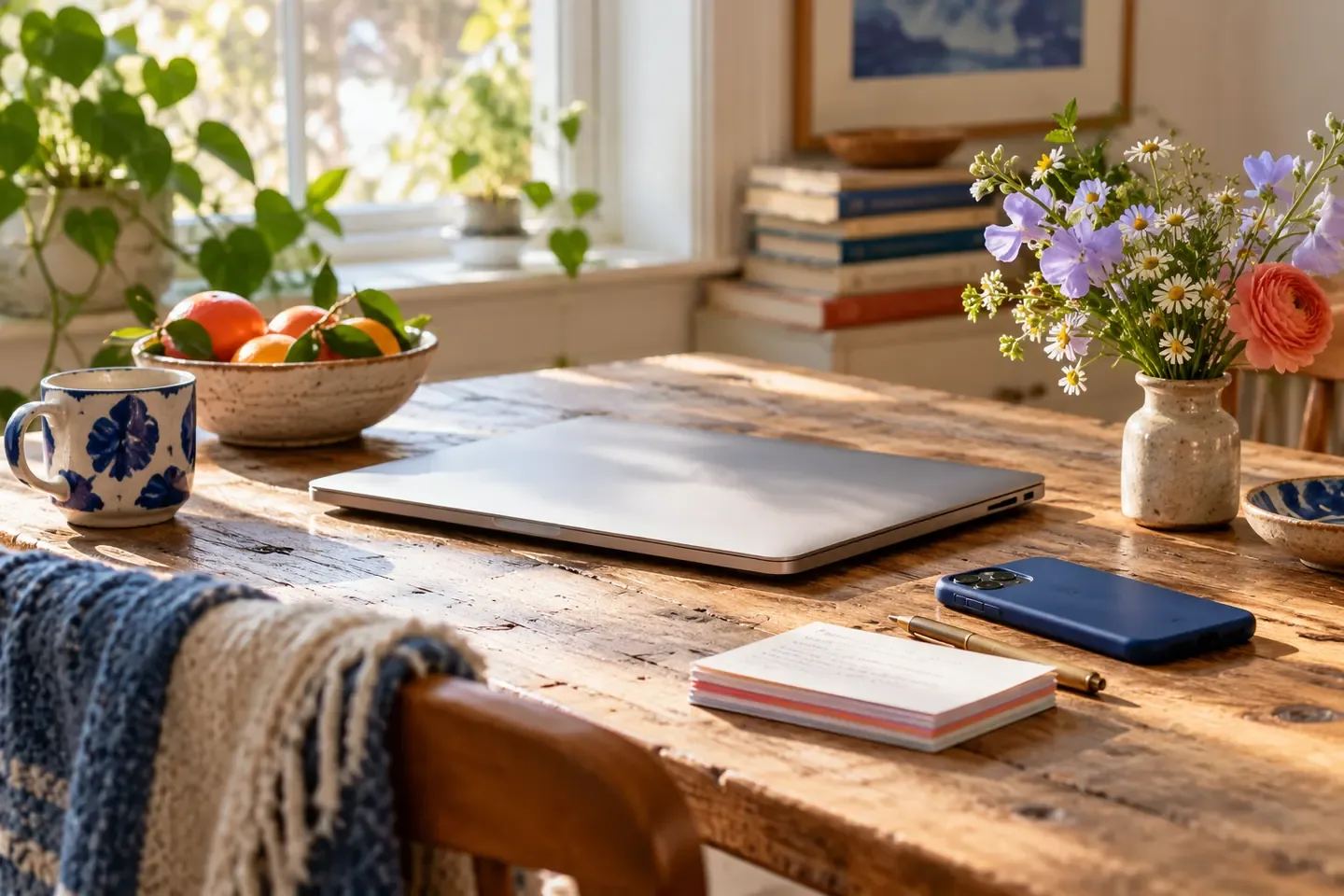
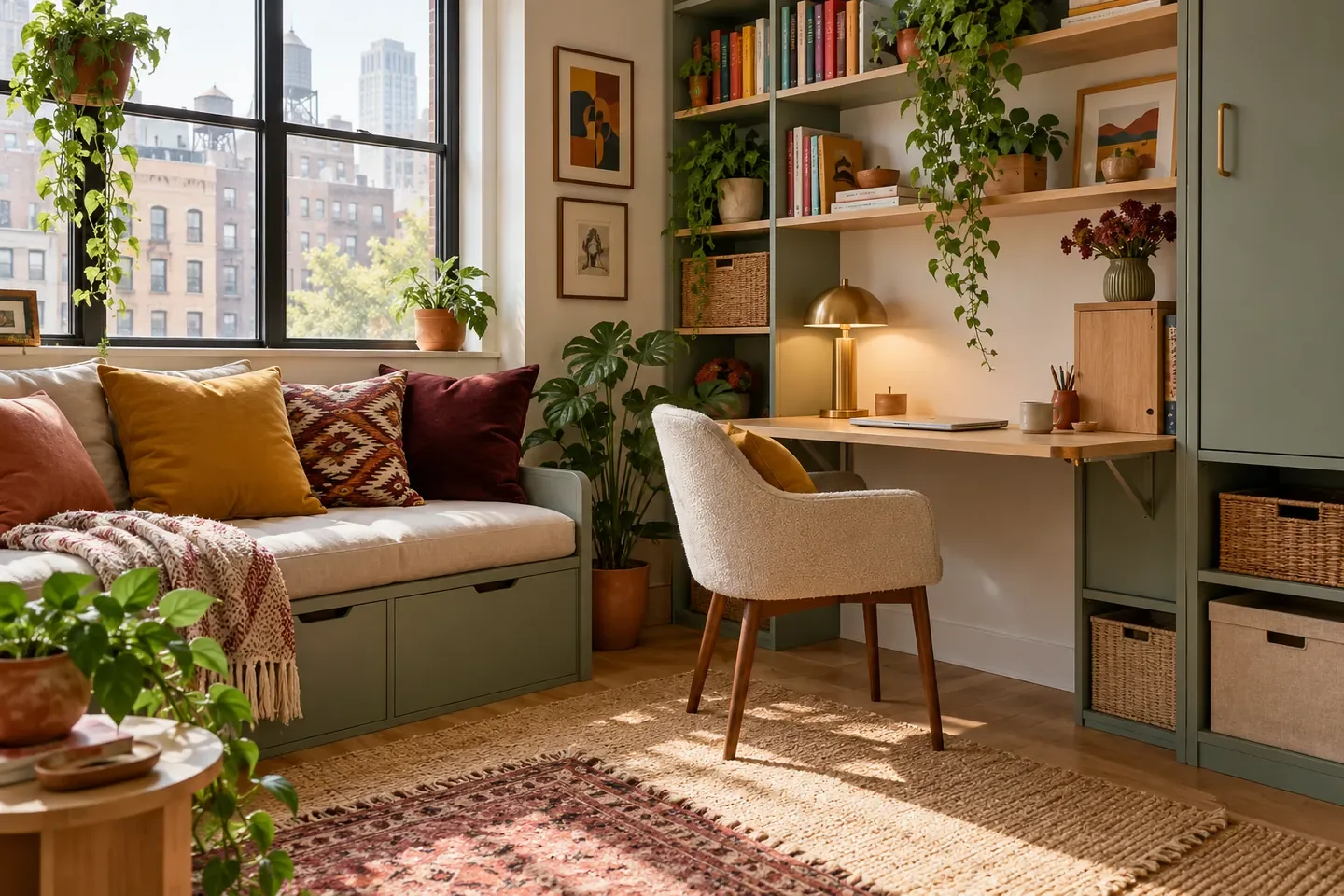
Small spaces are often asked to do several jobs at once. A table becomes a desk, a place to eat, and a landing spot for everything carried through the door. It is tempting to respond by adding more organizers. But before a new shelf can help, it is worth asking a simpler question: what actually happens here each day?
The answer may reveal that the problem is less about the room's size than about the handoffs between its different uses.
Notice the activities, not just the objects
Walk through a typical day and name the activities that occur in the space. Perhaps you work at the table in the morning, share a meal there in the evening, and sort paperwork on weekends. Each activity has a starting setup and an ending state. The friction often appears when the first setup is left in the way of the next one.
Write down the few things each activity truly needs. A work session may need a laptop, charger, notebook, and water. If those four items can travel together in a tray or bag, changing the table's role becomes much easier. This is not a rule that every object needs a container. It is a way to reduce the number of decisions between one use and another.
Protect the paths you use most
The clearest floor plan can still fail if a chair blocks a door or a cabinet cannot open fully. Notice where you walk, turn, sit, and reach. Keep the path between frequently used places easy to follow. A piece of furniture that fits by measurement may still make a room harder to live in if it interrupts those movements.
Try moving existing pieces before buying anything. A lamp shifted to another corner or a table turned in a new direction can change how useful the space feels. Live with the change for a few days. The first impression is helpful, but daily use is a better test.
Look for repeated bottlenecks
- What collects beside the door because it has no next place?
- Which item must be moved every time you use the table?
- Where do cables or papers interrupt another activity?
- What do you reach for daily but store far away?
Each answer points to a small change with a clear purpose. A hook may help with a bag that always lands on a chair. A document folder may help if papers repeatedly cover the table. Neither is useful simply because it looks tidy in a photograph.
Let storage match how often you use things
Keep frequent items easy to reach and occasional items farther away. This sounds obvious, yet spaces often drift toward the opposite pattern: rarely used things hold the convenient spots because they arrived first. Revisiting one shelf or drawer at a time can restore a better order without requiring a whole-room project.
Leave some surfaces partly clear if they need to change roles during the day. Empty space can be functional. It gives you somewhere to put down a meal, open a book, or begin a task without clearing yesterday's materials first.
Try a two-day handover test
Before buying a new organiser, record one activity change:
| Change | What blocks it now? | Small trial | Did it help? |
|---|---|---|---|
| Desk to dinner table | Laptop, charger and papers spread out | Move the work set together in an existing tray | ___ |
| Arriving home | Bag lands on the only chair | Give it one reachable place by the entrance | ___ |
| Bedtime | Items have to leave the bed first | Move their temporary landing place earlier in the evening | ___ |
Try the arrangement through ordinary mornings and evenings. Note what still needs moving, rather than judging only whether it looks neater. Adapt heights and routes to the people using the room; there is no single floor plan for every body or mobility need.
If adding tall storage, include stability in the plan. The U.S. Consumer Product Safety Commission's Anchor It guidance (opens in a new tab) recommends properly anchoring furniture and televisions and following manufacturer instructions. Do not substitute an unverified adhesive shortcut for the specified fixing method. In a rental, resolve installation permission and a suitable fixing approach before buying furniture that depends on anchoring.
Choose changes by the effort they save
When considering a purchase, ask which recurring action it will make easier. If the answer is vague, wait. Small spaces benefit from restraint because every new object occupies room and asks to be managed.
The most useful arrangement may look ordinary: a clear route, a reachable set of everyday items, and a quick way to switch the room from one purpose to another. The measure is how well the space supports your life when nobody is taking a picture of it.
Frequently asked questions
How can I make small spaces work better without buying more storage?
Start with the change you repeat most often, such as clearing the table for dinner or moving a bag off your chair. Give the items involved a convenient place using what you already own. Try the arrangement for a few days before buying anything, and keep the routes to doors and frequently used furniture clear.
What if the same table has to be my desk and dining space?
Keep the work items you use together in a tray, folder or bag that can move as one. Decide where that set goes when the table changes jobs, then leave enough clear surface to begin the next activity. A simple handover routine is often more useful than adding another organiser to the table.
How do I know whether a furniture change actually helped?
Live with it through ordinary workdays and evenings. Notice whether you can walk through the room, open cupboards, reach everyday items and switch activities with less effort. If a piece fits by measurement but repeatedly needs moving, reconsider its position. Judge the change by daily use rather than one tidy photograph.